

There are so many different terms and phrases when it comes to listing gluten on restaurant and cafe menus, and they can be very confusing – for even the most seasoned of coeliacs!
Gluten free. Gluten Friendly. Low gluten. So what on earth does it all mean?
In Australia and New Zealand, we have the most strict laws in the world, in regards to food labelling – which is fantastic for those of us with coeliac disease.
According to our food standards code, a product can only be marketed as gluten free if it has been formally tested, and is found to contain no detectable gluten. The threshold of this testing is usually between 3-5ppm (parts per million).
Any food containing oats can’t be labelled gluten free, regardless of whether it has been tested or not.
The rest of the world follows a gluten free standard of 20ppm (parts per million) or less. They also include oats as part of a gluten free diet. This is very important to be aware of when travelling, ordering products online, or shopping at stores that sell imported products. While most stores are good at checking the labels of products they import, items do sometimes fall through the cracks. There are also some stores that choose to sell imported gluten free products, because they are profitable. if you see this happening, you should report them to the food safety authority.
For example, gluten free Oreos from America contain oat flour, and there is an international food store in south west Sydney that sells them (even though they are aware they can’t legally be advertised as gluten free in Australia). They have been reported multiple times, and now choose to sell them under the counter, for those who choose to ask for them. I have seen these being used in gluten free cupcakes, slices and milkshakes (it’s how I first discovered they were available here) – so be wary, and always ask for the brand if someone is selling a cookies and cream gluten free item…
Coeliac Australia states that for a product to be labelled as low gluten, it must contain between 20ppm and 200ppm, however these products aren’t safe for people with coeliac disease – only for people with a gluten intolerance, or who follow a gluten free diet for other reasons.
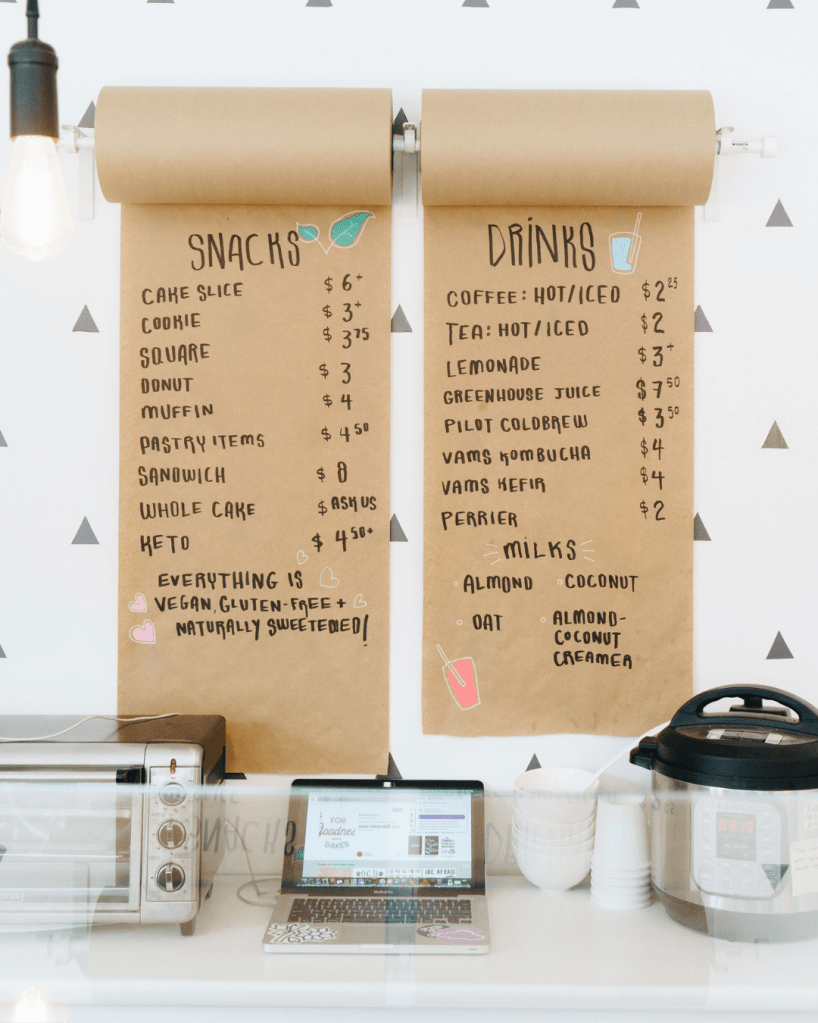
So when it comes to foods in cafes and restaurants, what can and can’t be labelled as gluten free?
If a food is bought in from an outside supplier labelled (and tested) as gluten free, is stored separately from all other foods, and is prepared in a separate area with it’s own utensils, it can be labelled as gluten free. For example, this would apply to baked goods made offsite, brought in, stored in their own display case and then prepared in their own area.
If a food is made onsite from gluten free ingredients, and is prepared in a separate area, with clear cross contamination practices in place, it can be labelled as gluten free.
If an establishment doesn’t serve any gluten containing products, they can advertise themselves as gluten free. Many of these establishments are now part of the Coeliac Australia endorsement program – and go through rigorous testing to be accepted. They’re always your best choice!
If an establishment serves both gluten, and gluten free foods, and only has one kitchen or preparation area, they can’t advertise as having any gluten free items, as the risk of cross contamination is high. They can however, advertise products as “low gluten”. This means that the product is gluten free by ingredient, but is prepared in an environment that also prepares gluten containing products, so the risk of cross contamination is there. Coeliac Australia states that these items aren’t suitable for people with coeliac disease. This is the same as packaged products having a “may contain” statement.
In Australia, the terms “gluten friendly” and “no added gluten” are not allowed to be used under the food safety code, however it is quite common for cafes and restaurants to use these phrases – especially the “gluten friendly” phrase. I find this one irritatingly funny. Because let’s be honest – if you have to enquire about gluten in a product, it’s not your friend.
Typically, these phrases are used in the same way as the “low gluten” phrase. The product is gluten free by ingredient, but prepared in a shared kitchen or space, or displayed in a shared cabinet. And again, is not coeliac safe, according to Coeliac Australia.
If I see a cafe or restaurant using these terms, I am more cautious than usual. Because if they can’t get the terminology right, can they get the procedures right? Do they understand the basics of cross contamination? If they can’t follow the terminology of the food safety code, what else are they getting wrong?
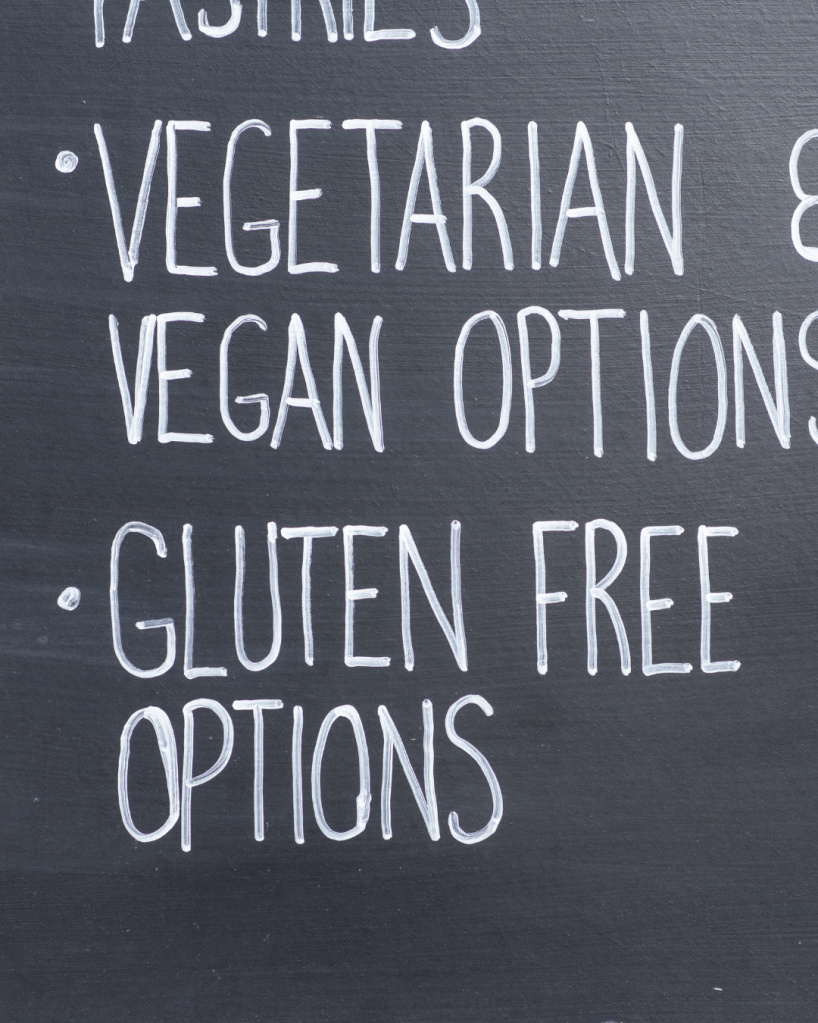
So how do you make a decision about when it is safe to eat out, and when it isn’t?
If I can find a 100% gluten free establishment, that will always be my first option, but let’s be honest, they are few and far between! Most of the time, if we are eating out, it will be at a shared gluten/gluten free cafe or restaurant.
We don’t eat out very often – probably only a handful of times a year, because the risk is high, and I get sick very quickly if I have even the smallest trace of gluten, but when I do, I get out my trusty list of questions.
I ask everything I need to know to make a decision on whether or not I think the risk is worth it, and I go from there. This includes checking the menu online, calling the restaurant or cafe to check their cross contamination procedures, speaking to the staff in person, and then double checking the food before eating. You can find my detailed list of questions here, and why they’re important to ask every single time. Even if it’s a place I have visited many times.
Things that will make me more comfortable though, is if the menu has gluten free items listed, with a disclaimer at the bottom, that outlines cross contamination information. This tells me that they are aware of cross contamination, and might be more likely to take extra care when preparing our food.
Another thing that makes me more comfortable, is if gluten free foods are stored separately from other foods. This can be on a cake stand covered with a lid, in its own display case, or individually wrapped, if it is stored in a shared display case.
Another way that cafes can show their awareness of cross contamination, is if gluten free foods are stored on the top shelf of a cabinet, with a solid shelf underneath them, with all gluten containing foods stored below. This ensures that there is no chance that crumbs from gluten foods can drop down onto gluten free foods. If you are at an eatery that stores foods this way, it is incredibly important to ensure that your items are handled with separate utensils, as they may still just use the same tongs or cake slices for the whole cabinet.
Ultimately, you will make the decision that is right for you, and with experience, this will become easier. Eating out is such a wonderfully social thing, it brings so much joy to our lives, and it’s not something that I think we should have to miss out on, so educate yourself, empower yourself, and enjoy those wonderful food moments safely…
And if you’ve found somewhere safe to eat out – let me know! I’d love to pay them a visit too!
-Jo.





 The Coeliac Connection
Leave a comment